
Find the real cause of your vertigo & dizziness
Get a complete VNG test in Patna at Mom’s Care, Rajendra Nagar. Our infrared-goggle assessment helps identify inner-ear weakness, BPPV and abnormal balance responses so your treatment can be based on objective findings.
What is a VNG test?
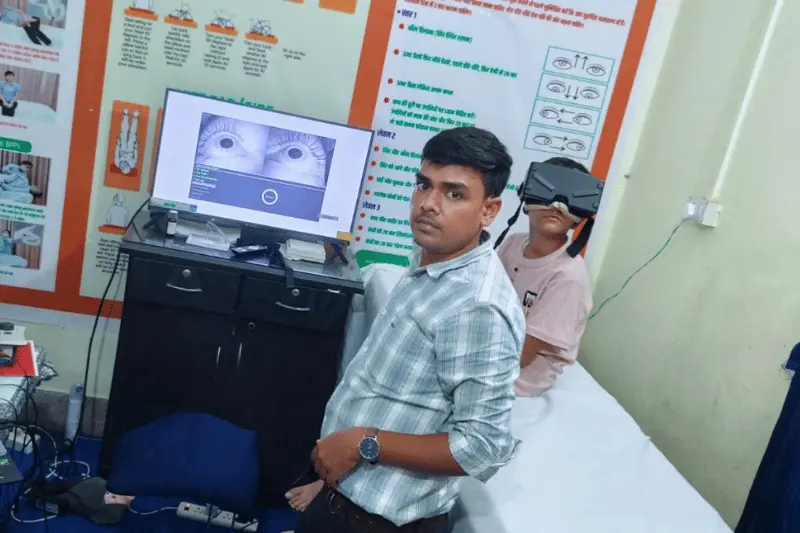
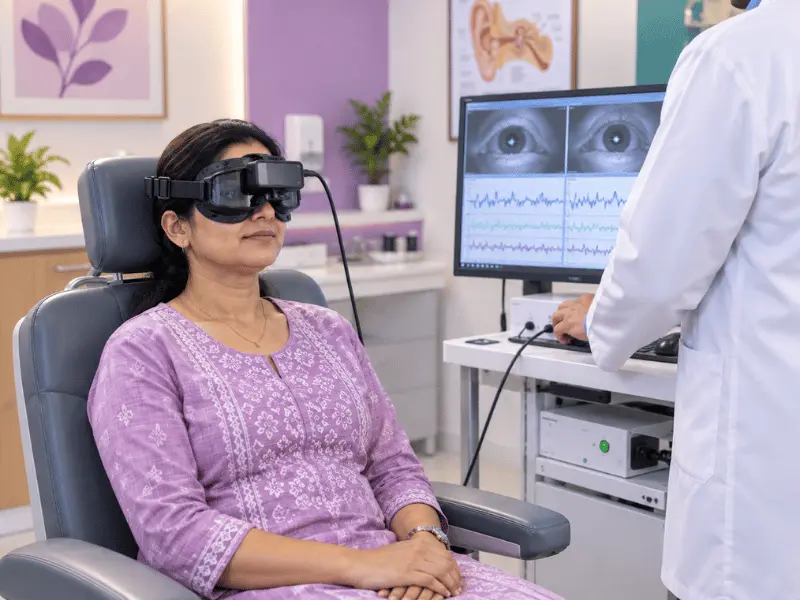
Videonystagmography is a computerised, non-invasive test that evaluates the relationship between your eyes, brain and inner-ear balance system.
The inner ear and eyes are connected through the vestibulo-ocular reflex. When one side of the balance system becomes weak or sends incorrect signals, the eyes may make small rhythmic movements called nystagmus.
Infrared VNG goggles record these movements during visual, positional and vestibular tasks. The findings help determine whether dizziness is more consistent with an inner-ear disorder or a pattern requiring further medical or neurological evaluation.
VNG does not treat vertigo by itself. It gives your clinician objective information so repositioning, rehabilitation or medical referral can be selected more accurately.
Common causes of vertigo and imbalance
“Dizziness” can describe several sensations. A structured vestibular assessment helps convert these symptoms into measurable findings.
BPPV or loose inner-ear crystals
Positional and Dix-Hallpike recordings can identify the direction, latency and duration of nystagmus and help determine the affected ear and canal.
Vestibular neuritis and labyrinthitis
Caloric testing compares responses from both ears and may quantify one-sided vestibular weakness after inflammation or infection.
Inner-ear fluid imbalance
Episodic vertigo, tinnitus, ear pressure and fluctuating hearing require correlation with audiometry and ENT evaluation.
Vestibular migraine
A near-normal peripheral VNG result may redirect evaluation toward migraine-related or visually triggered dizziness.
Bilateral vestibular loss
Reduced responses on both sides may explain poor balance in darkness, frequent falls or bouncing vision while walking.
Central vestibular warning patterns
Abnormal saccades, pursuit, gaze stability or fixation suppression may indicate that medical or neurological evaluation is appropriate. VNG is a screening tool and does not replace neurological examination.
Cervical dizziness
Testing helps assess whether a vestibular deficit is present alongside neck stiffness, injury or postural problems.
Tinnitus and dizziness
VNG with hearing tests provides a broader view when tinnitus, hearing changes and dizziness occur together.
Falls and age-related imbalance
Findings can support personalised balance retraining, mobility planning and fall-prevention strategies.
Seek emergency medical care for sudden vertigo with slurred speech, facial or limb weakness, double vision, fainting, severe headache, chest pain or sudden hearing loss.
Four important parts of a complete VNG test
Each stage examines a different part of the eye and balance pathways. Together, they create a more useful clinical picture.
Oculomotor tests
Gaze, saccade, smooth-pursuit and optokinetic tasks assess how accurately the eyes follow stationary and moving targets.
Spontaneous nystagmus
Eye movements are recorded while the head remains still, with and without visual fixation.
Positional testing
Dix-Hallpike and other positions assess whether movement triggers canal-specific BPPV nystagmus.
Caloric assessment
Warm and cool stimulation evaluates each ear separately and may identify unilateral or bilateral weakness.
What happens during a VNG appointment?
Your appointment follows one connected clinical journey—from history and examination to report interpretation and treatment planning.
Your vertigo history is mapped
The clinician records the type, duration and triggers of dizziness, medicines, hearing symptoms, migraine history and previous injuries.
Ear and hearing examination
Otoscopy and indicated hearing tests check for wax, eardrum perforation or middle-ear conditions affecting the protocol.
Infrared goggles and calibration
The goggles are fitted comfortably and calibrated while you look at a visual target.
Oculomotor recordings
You follow stationary and moving lights during gaze, saccade, pursuit and optokinetic tasks.
Head and body positions are assessed
The clinician guides you into selected positions, including Dix-Hallpike where clinically appropriate.
Caloric testing when suitable
Each ear may be stimulated separately. A brief spinning sensation may occur and usually settles quickly.
Recordings are reviewed
Eye traces, nystagmus, positional patterns and caloric calculations are interpreted with the clinical history.
Report and treatment plan
Findings are explained in Hindi or English. The next step may include repositioning, rehabilitation or medical referral.
How to prepare for your VNG test
Correct preparation improves recording quality and can make the appointment more comfortable.
What you should do
- Eat a light meal approximately two hours before testing.
- Ask your doctor whether vertigo medicines should be paused.
- Bring previous prescriptions, hearing reports and scans.
- Wear spectacles instead of contact lenses.
- Bring a family member or friend if possible.
- Arrive approximately ten minutes early.
What you should avoid
- Do not stop essential medicines without medical approval.
- Avoid alcohol for 48 hours unless instructed otherwise.
- Avoid caffeine, tobacco and nicotine on the test morning.
- Do not wear mascara, kajal, eyeliner or contact lenses.
- Avoid oily products around the eyes or forehead.
- Do not arrive severely sleep-deprived.
Inform the clinic if you have an eardrum perforation, active ear discharge, recent ear surgery, pregnancy, serious neck or back pain, or another condition requiring a modified protocol.
VNG report and interpretation
Your report may contain eye-movement traces, velocity measurements and caloric calculations interpreted with your symptoms and history.
| Example finding | Possible interpretation | Common next step |
|---|---|---|
| Torsional-upbeating nystagmus during Dix-Hallpike | Posterior-canal BPPV | Epley maneuver or canal-specific treatment |
| Horizontal nystagmus during the supine roll test | Horizontal-canal BPPV | Barbecue-roll or Gufoni-type maneuver |
| Significant unilateral caloric weakness | One-sided vestibular hypofunction | Clinical correlation and vestibular rehabilitation |
| Low responses from both ears | Possible bilateral hypofunction | Further assessment and balance retraining |
| Abnormal saccades, pursuit or fixation suppression | Possible central involvement | Medical or neurological referral when indicated |
| Normal VNG despite continuing symptoms | Another cause may be present | Consider migraine, PPPD, cervical or medical assessment |
A VNG report should not be interpreted in isolation. Results must be correlated with symptoms, examination and medical history.
Typical VNG reference values
Exact ranges differ according to equipment, stimulus settings, laboratory protocol and patient age.
| Parameter | Typical reference | Important note |
|---|---|---|
| Spontaneous nystagmus | Below approximately 4–6°/s | Direction and fixation also matter |
| Gaze-evoked nystagmus | Generally absent | Medication and fatigue may affect results |
| Saccade latency | Approximately 150–250 ms | Attention and age influence latency |
| Saccade accuracy | Approximately 80–120% | Persistent under- or overshoot requires interpretation |
| Smooth-pursuit gain | Often above 0.8 at low frequencies | Age and test frequency affect gain |
| Caloric unilateral weakness | Usually below 20–25% | Use the laboratory’s validated cut-off |
| Directional preponderance | Usually below 26–30% | This value is less strongly localising |
VNG test cost in Patna
Pricing depends on the included battery, caloric testing and whether hearing or additional vestibular assessments are required.
Basic Screening
- Detailed vertigo history
- Selected oculomotor tests
- Positional and Dix-Hallpike testing
- Approximately 30 minutes
Complete VNG Test
- Complete indicated VNG battery
- Caloric assessment where suitable
- Written report and interpretation
- Same-day counselling
Comprehensive Workup
- Complete VNG assessment
- Pure-tone audiometry
- Tympanometry
- Additional indicated tests
Prices are indicative. Call +91 96810 28147 for the current price and package inclusions.
ENG vs VNG and other balance tests
Each test examines a different part or frequency range of the balance system. They often complement rather than replace one another.
| Test | What it measures | Useful for | Limitation |
|---|---|---|---|
| VNG | Eye movements using infrared video | BPPV, vestibular asymmetry and central screening | Does not assess every vestibular organ |
| ENG | Eye-movement signals using electrodes | Alternative where video testing is unavailable | Cannot directly record torsional movement |
| vHIT | High-frequency vestibulo-ocular reflex | Rapid semicircular-canal assessment | Does not replace positional VNG |
| VEMP | Otolith and vestibular-nerve responses | Selected otolith and nerve disorders | Depends on protocol and middle-ear health |
| Audiometry | Hearing thresholds | Hearing loss and Ménière’s-related symptoms | Does not directly measure balance |
| MRI or CT | Structural anatomy | Selected neurological concerns | Normal imaging does not exclude vestibular dysfunction |
Vestibular rehabilitation and BPPV treatment
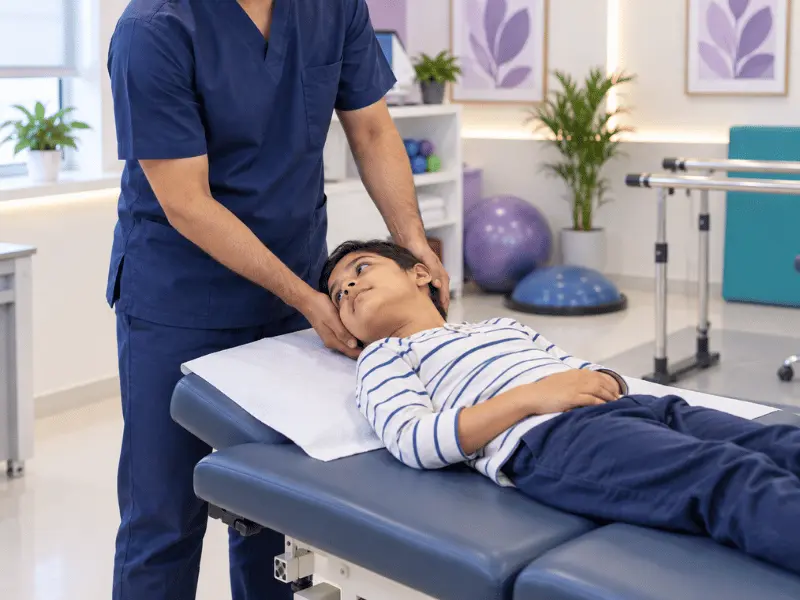
Mom’s Care provides exercise-based rehabilitation and canal-specific repositioning when supported by clinical findings.
- Epley maneuver for suitable posterior-canal BPPV
- Barbecue-roll, Semont or Gufoni-type maneuvers when indicated
- Gaze-stabilisation exercises
- Habituation exercises for motion sensitivity
- Balance, gait and fall-prevention training
- Posture and neck assessment when appropriate
Specialist vertigo care under one roof
Compare professional qualifications, test protocol, report quality and access to follow-up treatment when selecting a centre.
Qualified professional
Assessment by a clinician with audiology and vestibular-care experience.
Complete VNG protocol
Visual, spontaneous, positional and suitable caloric components are considered.
Hearing and balance together
Audiometry and tympanometry can assess related ear symptoms.
Diagnosis plus treatment
BPPV repositioning and rehabilitation can be planned from findings.
Clear report and counselling
Results and next steps are explained in Hindi or English.
Convenient Patna location
Located near Vaishali Golambar in Rajendra Nagar, Patna.
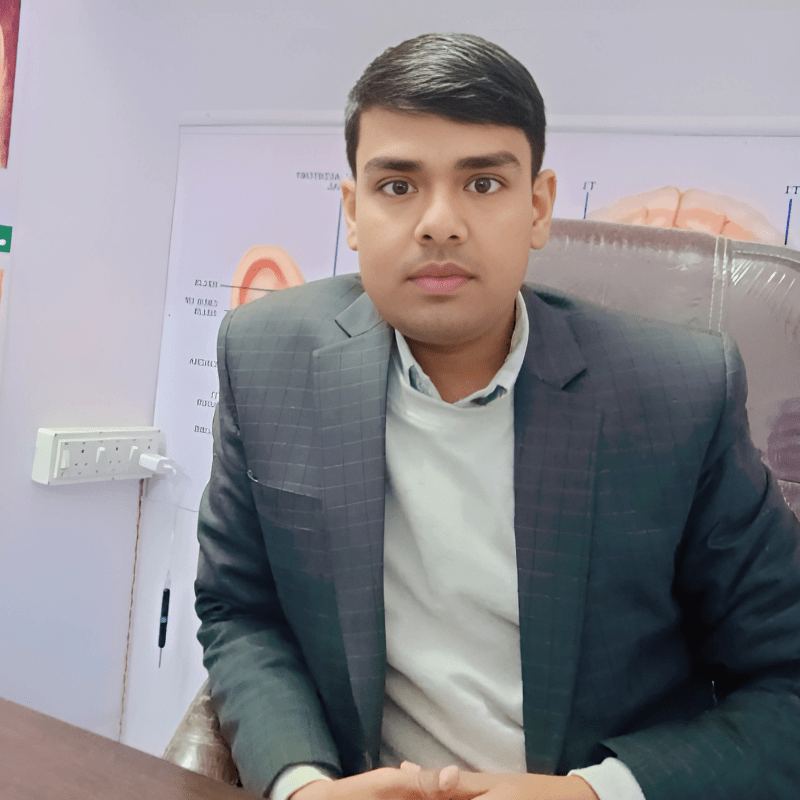
Dr. Abhijeet Kumar
Audiologist · Speech-Language Pathologist · Vertigo SpecialistDr. Abhijeet Kumar coordinates the assessment and interpretation of patients presenting with vertigo, dizziness, BPPV, tinnitus and balance disorders at Mom’s Care.
His approach combines clinical history, vestibular examination, VNG findings and hearing assessment to develop a focused treatment, rehabilitation or referral plan.
VNG test and vertigo care in Patna
Mom’s Care is located near Vaishali Golambar and is convenient for patients from Rajendra Nagar, Kankarbagh and nearby areas.
Address and clinic timings
- Mom’s Care – Autism, Speech and Occupational Therapy Center
- Near Vaishali Golambar, Road Number 12
Rajendra Nagar, Patna, Bihar 800016 - Phone
+91 96810 28147
+91 79036 78824 - Monday–Saturday
9:00 AM–7:00 PM - Email
info.momscares@gmail.com
Convenient for patients from Rajendra Nagar, Kankarbagh, Bahadurpur, Kumhrar, Malahi Pakri, Patna Junction, Lohia Nagar, New Bypass, Boring Road, Bailey Road, Danapur, Phulwari Sharif and Patna City.
VNG test FAQs
Quick answers about the procedure, preparation, insurance, results and cost.
What is a VNG test?
A VNG test records eye movements using infrared goggles to evaluate vertigo, dizziness and vestibular function.
How much does a VNG test cost in Patna?
A complete assessment generally costs ₹2,000–₹4,500 depending on the included tests and package.
How long does a VNG test take?
Standard testing usually takes 45–60 minutes. Combined hearing and vestibular testing may take longer.
Is a VNG test painful?
No needles, injections or radiation are involved. Brief spinning or nausea may occur during positional or caloric testing.
Can a VNG test detect BPPV?
Yes. Positional recordings may identify patterns consistent with BPPV and help determine the affected canal and side.
Is VNG covered by health insurance?
Coverage depends on your insurer and outpatient diagnostic benefits. Confirm coverage before testing.
What is the difference between ENG and VNG?
ENG uses skin electrodes. VNG uses infrared cameras and can directly document torsional eye movements.
Do I need a doctor’s referral?
A referral is helpful but may not always be mandatory. It helps coordinate the results with your treating doctor.
Can I drive after the test?
It is safer to arrange a companion because mild unsteadiness or nausea may continue briefly after testing.
What if my VNG result is normal but I still feel dizzy?
Other causes may include vestibular migraine, PPPD, cervical factors, medication effects or medical conditions requiring further evaluation.
Ready to get clarity about your dizziness?
Share your details and open a pre-filled WhatsApp enquiry. The clinic can confirm appointment availability, preparation instructions and the current test cost.
- Same-day slots may be available
- Report and counselling included
- Hindi and English support
- Rajendra Nagar clinic location
Medical disclaimer: This page provides general patient education and does not replace individual medical advice, examination, diagnosis or treatment. Reference values, suitability and treatment recommendations vary between patients. Seek emergency care for sudden vertigo accompanied by weakness, slurred speech, double vision, fainting, severe headache, chest pain or sudden hearing loss.